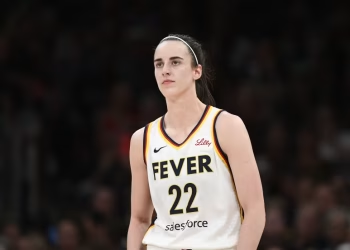
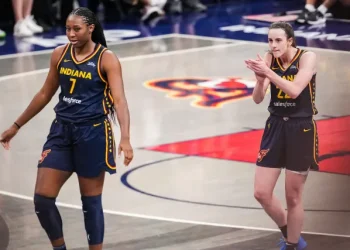
The growing rivalry between Caitlin Clark and Angel Reese is expected to show up not just on the court, but also in their paychecks for the 2026 WNBA season. With a new collective bargaining agreement (CBA) set to take effect, both players are in line for significant salary increases. The updated agreement raises the team salary cap to $7 million, offering more financial flexibility across the league. While this presents opportunities for teams like the Chicago Sky to rebuild, it may also create new challenges for franchises such as the Indiana Fever as they manage rising player earnings.
During their first two seasons in the WNBA, both Clark and Reese have quickly established themselves as standout talents. Each has earned two All-Star selections, and they were top contenders in the 2024 Rookie of the Year race, with Clark finishing first and Reese close behind in second place. Their rapid rise has positioned them among the league’s brightest young stars, making their future earnings a topic of growing interest.
Despite their similar trajectories, Clark is projected to receive a larger pay increase than Reese in 2026. The key factor behind this difference lies in individual accolades. Clark secured a spot on an All-WNBA team during her rookie season, an achievement that carries significant weight in salary negotiations under the new agreement. Reese, while highly impactful, has not yet earned that particular recognition.
As a result, Reese’s salary is expected to rise to around $350,000, a substantial jump from her 2025 earnings of approximately $81,000. Clark’s increase, however, is projected to be even more dramatic, climbing from about $85,000 to roughly $530,000. This would put her earnings at about one and a half times higher than Reese’s, reflecting both her on-court performance and league recognition.
Looking further ahead, Clark may have an even more lucrative opportunity on the horizon. Under a provision in the new CBA, she could qualify for a contract extension exceeding $1 million as early as 2027. Reese could eventually reach similar financial heights, but doing so will likely depend on her continued development, particularly in areas like scoring and ball-handling to complement her already dominant rebounding ability.