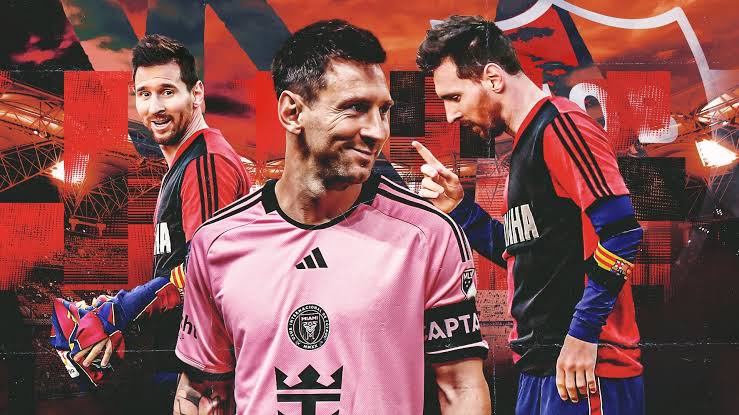
Lionel Messi’s story has always felt like football mythology in real time—rags to riches, Rosario to world domination, heartbreak to ultimate glory. Now, that story appears to be circling back to where it all began. According to growing reports, the Argentine icon is preparing to leave Inter Miami and complete a long-awaited, emotional return to Newell’s Old Boys, the club of his childhood dreams.
For Messi, this move is less about trophies and more about legacy.
After conquering Europe with Barcelona, lifting the World Cup with Argentina, and redefining football stardom in Major League Soccer, the 37-year-old seems ready for a final chapter written in familiar colors. Newell’s Old Boys—the club he joined at age six and still calls “my home”—has always loomed large in Messi’s imagination, even as his career took him thousands of miles away.
The End of the Miami Chapter
Messi’s arrival at Inter Miami was transformative. The club became a global brand overnight, stadiums filled across the league, and MLS enjoyed unprecedented attention. On the pitch, Messi delivered instantly, leading Miami to silverware and injecting belief into a young, ambitious project.
But the Miami chapter was never meant to be permanent.
Those close to Messi have long suggested that his time in the United States was designed to balance football with family life, commercial freedom, and a lighter competitive schedule after years at the sport’s highest intensity. With that box now checked, the pull of home appears stronger than ever.
A Return Written in Emotion
A move back to Newell’s Old Boys would be symbolic in the purest sense. Messi never played a senior competitive match for the club that shaped him before Barcelona came calling. Returning now would close a circle that has remained open for more than two decades.
In Rosario, Messi is not just a footballer—he is a son of the city. Murals bearing his face line the streets. Children wear his name on their backs. For Newell’s supporters, the idea of seeing Messi in red and black, even briefly, feels like a dream long deferred.
From a sporting perspective, expectations would be carefully managed. Messi would not be returning to carry a team on his shoulders or chase individual accolades. Instead, his presence would elevate the league, inspire young players, and offer moments of magic rather than relentless dominance.
Impact Beyond the Pitch
Messi’s return would be seismic for Argentine football. Television audiences would spike, stadiums would sell out, and the domestic league would enjoy global visibility rarely seen in the modern era. For Newell’s, the commercial and cultural impact would be immediate—membership growth, sponsorship interest, and worldwide attention.
More importantly, it would reaffirm the emotional bond between South American football and its greatest export. In an era dominated by European superclubs and global brands, Messi choosing Newell’s would feel like a quiet rebellion against football’s increasingly corporate reality.
Timing and Legacy
With his international future likely winding down after achieving every possible honor with Argentina, Messi appears focused on how he wants to be remembered—not just as the greatest player of his generation, but as someone who never forgot where he came from.
A farewell tour in Europe or an extended stay in MLS would have been easy choices. A return to Newell’s is the harder, more heartfelt one.
If this move is confirmed, it won’t be about goals scored or matches won. It will be about a boy from Rosario coming home, boots on, heart full, completing a journey that began on dusty training pitches and led to football immortality.
And sometimes, the perfect ending isn’t the loudest—it’s the most meaningful.
