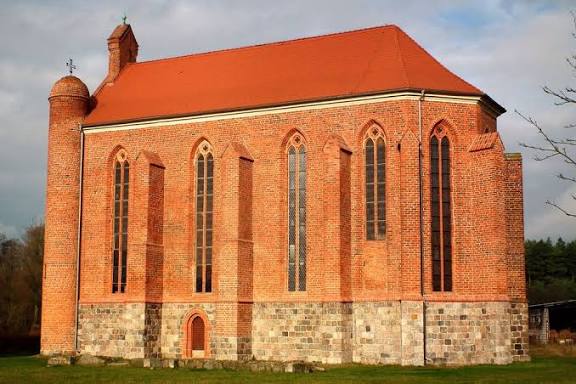
A routine archaeological survey has turned into one of the most intriguing medieval discoveries in recent Polish history. Beneath a modest stone chapel in southern Poland, researchers have uncovered a complex network of underground tunnels and sealed crypts—structures believed to date back to the era of the Knights Templar.
The discovery was made during conservation work on a 13th-century chapel long associated with crusader-era legends. While local folklore had hinted at hidden chambers beneath the site for generations, few expected the scale and sophistication of what lay below the foundations.
A Subterranean World Revealed
Ground-penetrating radar first revealed unusual voids beneath the chapel floor. Subsequent excavations exposed a narrow stone staircase descending into a series of interconnected tunnels, some reinforced with carefully dressed limestone blocks. The passages extend far beyond the chapel itself, suggesting the site once played a much larger strategic or ceremonial role than previously believed.
At the heart of the underground complex, archaeologists uncovered multiple crypts carved directly into bedrock. Several were sealed with stone slabs bearing faded symbols—simple crosses, geometric markings, and motifs commonly associated with medieval monastic orders.
“These were not hastily dug hiding places,” said one member of the excavation team. “They were carefully engineered spaces, designed for long-term use and secrecy.”
Traces of the Templars
The Knights Templar, a powerful military and religious order active during the Crusades, were known for their fortified structures and secretive practices. Historical records suggest the order held land in parts of medieval Poland, though physical evidence of their presence has remained scarce.
Artifacts recovered from the tunnels—including fragments of swords, buckles, candleholders, and a silver coin dating to the late 1200s—support the theory that the complex was used during the Templars’ peak influence in Europe. One crypt appears to have been a burial chamber, though human remains have yet to be fully analyzed.
The layout of the tunnels hints at multiple purposes: discreet movement between buildings, secure storage of valuables, and possibly ritual use. Some passages show signs of having been deliberately blocked, suggesting an intentional effort to conceal the network during a time of danger.
Legends, Treasure, and Reality
Unsurprisingly, the discovery has reignited long-standing legends of hidden Templar treasure. While archaeologists caution against sensational conclusions, they acknowledge that the secrecy and craftsmanship of the tunnels point to something of great importance being protected.
“Whether it was treasure, documents, or simply lives, these tunnels were built to safeguard something,” an expert noted. “What that was remains an open question.”
A New Chapter in Medieval History
The excavation is still in its early stages, and researchers expect years of study before the full extent of the underground network is known. For now, the site has been secured, and plans are underway to preserve the tunnels and crypts for future research—and possibly public access.
Beyond the mystery and romance of the Templars, the discovery offers rare insight into medieval engineering, religious life, and the lengths to which people went to protect what they held sacred.
What began as a quiet restoration project has become a gateway into the shadowy underworld of the Middle Ages—one that may yet rewrite part of Poland’s medieval past.
